
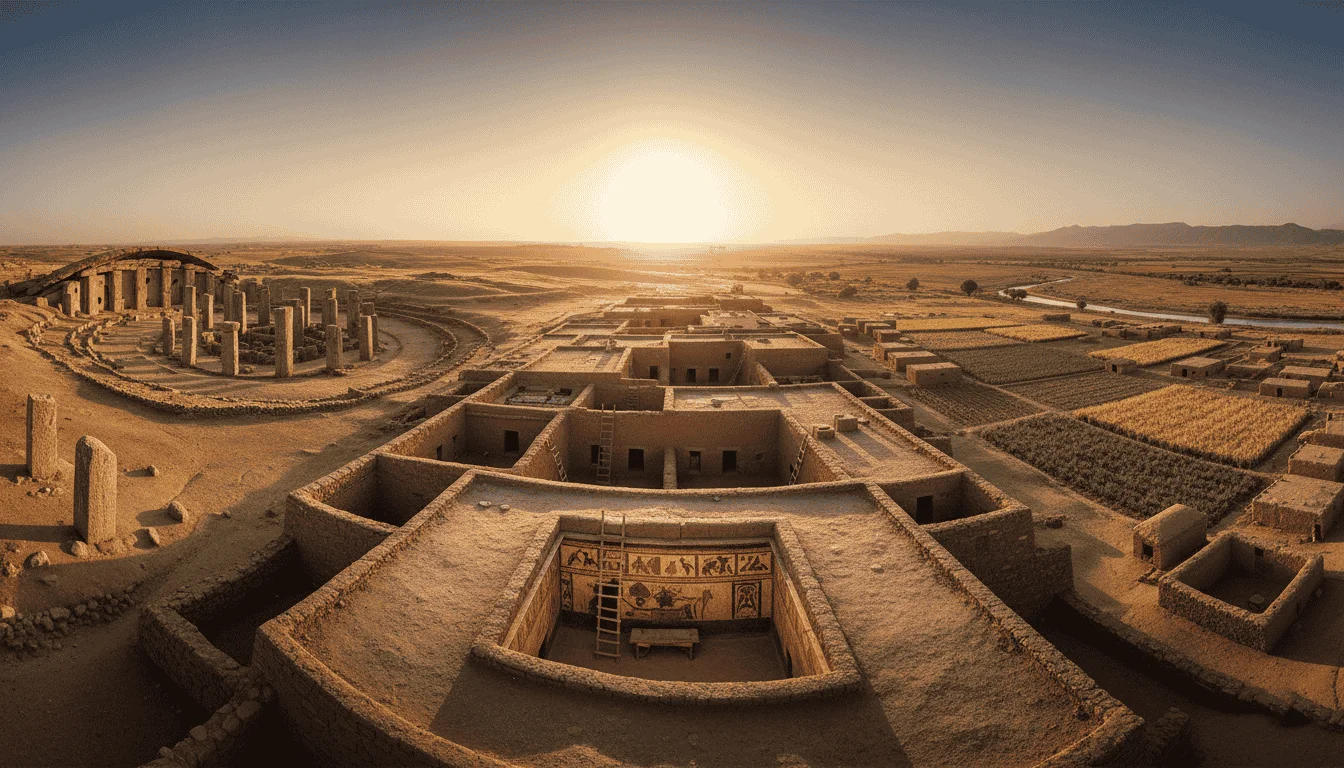


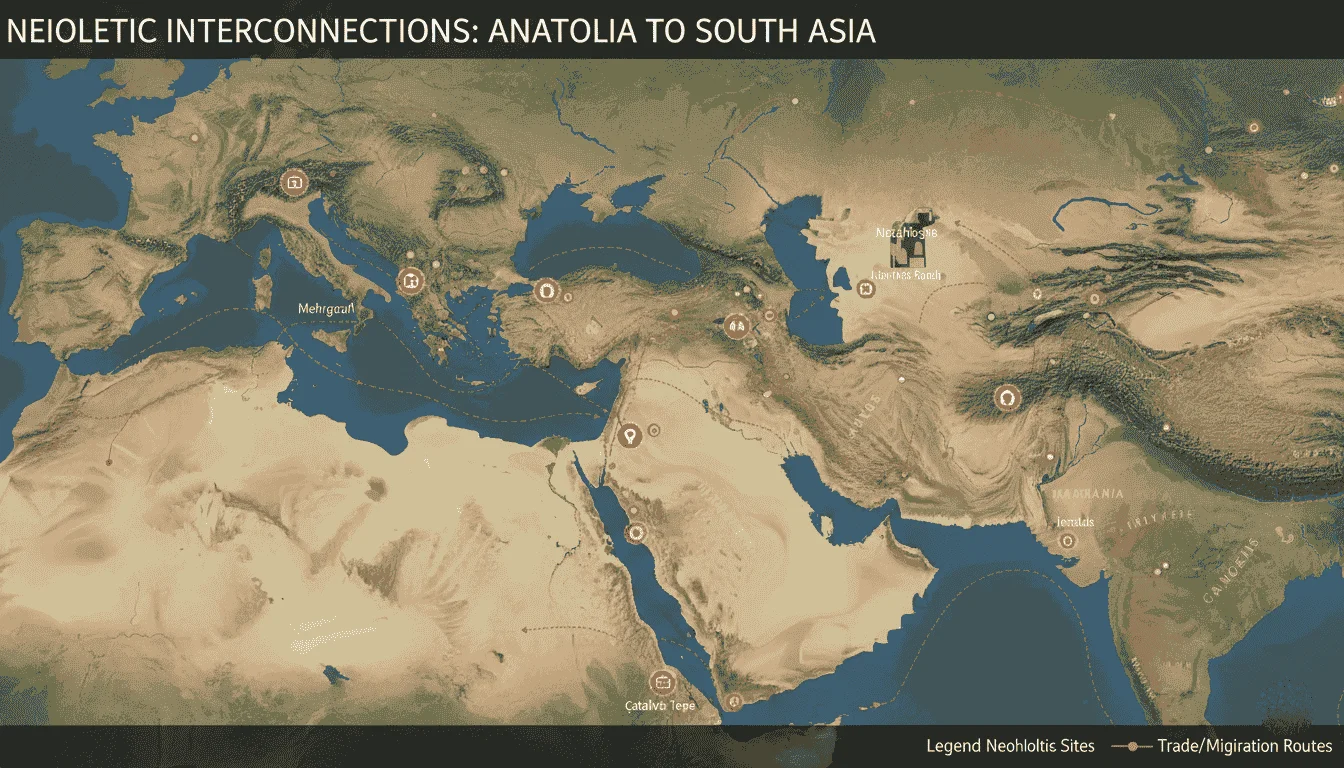
The origins of civilization cannot be understood without geography. Long before cities, writing, or empires emerged, early human communities selected specific landscapes that offered water, food, stone, and strategic advantages. Sites such as Göbekli Tepe, Çatalhöyük, and Mehrgarh reveal how geography shaped ritual centers, proto-urban settlements, and early agricultural villages.
In this article, you will explore the physical settings, regional environments, and key archaeological locations that made these sites possible—and why their landscapes mattered for humanity’s earliest social experiments.
The Role of Geography in the Origins of Civilization
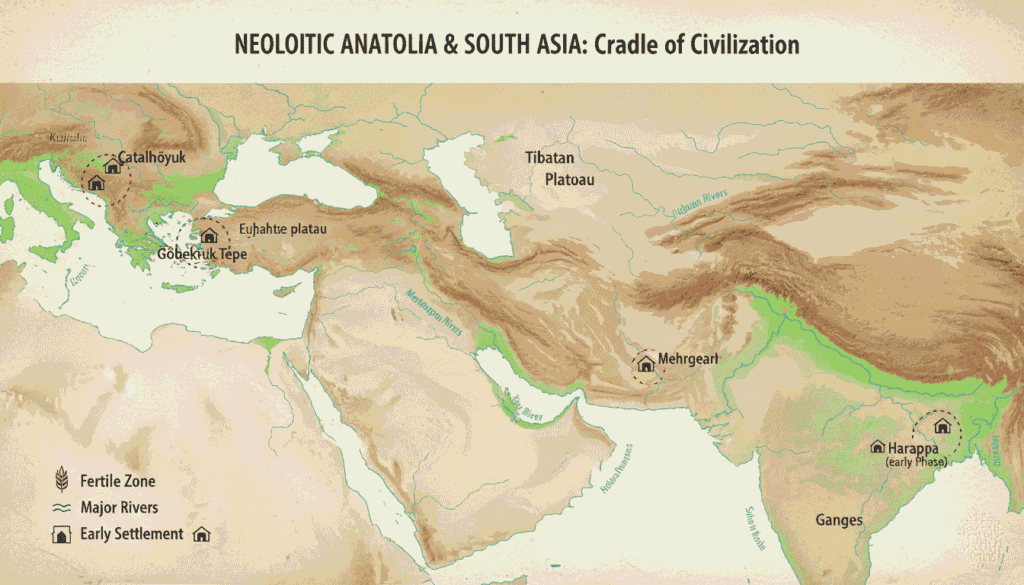
Geography acted as the silent architect of early societies. Access to fresh water, fertile soil, stone resources, and seasonal migration routes influenced where humans settled and how long those settlements endured.
Why geography mattered
- Rivers and rainfall supported early cultivation
- Hills and plateaus offered defense and visibility
- Trade corridors encouraged cultural exchange
Early civilizations did not appear randomly; they emerged where environmental opportunity met human innovation
Göbekli Tepe: Sacred Geography of Upper Mesopotamia

Located on a limestone ridge in southeastern Anatolia, Göbekli Tepe overlooks fertile plains once rich in wild grains and game animals. Its elevated position suggests deliberate placement for visibility and symbolic dominance over the surrounding landscape.
Geographic advantages
- Proximity to seasonal water sources
- Natural limestone for monumental pillars
- Located along hunter-gatherer movement routes
The site’s geography supports the theory that Göbekli Tepe functioned as a regional ritual center, drawing groups from across Upper Mesopotamia.
Çatalhöyük: Geography of a Proto-Urban Plain

Çatalhöyük was built on the Konya Plain, one of Anatolia’s most fertile inland basins. Unlike hilltop ritual centers, this settlement thrived on agriculture, seasonal flooding, and long-term habitation.
Environmental setting
- Rich alluvial soils for farming
- Nearby wetlands and rivers
- Flat terrain enabling dense settlement
Its geography allowed Çatalhöyük to become a permanent, tightly packed community, marking a shift toward proto-urban living.
Mehrgarh: Gateway of South Asian Prehistory

Mehrgarh lies at the edge of the Bolan Pass, a natural corridor connecting Central Asia, the Iranian Plateau, and the Indus Valley. This strategic position made it a crossroads of early migration and innovation.
Strategic location
- Access to mountain passes and plains
- Seasonal rivers supporting early farming
- Trade routes linking distant regions
Mehrgarh’s geography explains its long occupation and its role as a foundation for later Indus civilizations.
Comparing Regional Landscapes: Anatolia vs South Asia

While Göbekli Tepe and Çatalhöyük developed in Anatolia, Mehrgarh represents a South Asian pathway shaped by different climates and resources.
Key geographic contrasts
- Anatolia: plateaus, seasonal rainfall, ritual centers
- South Asia: river systems, trade corridors, gradual urbanization
These differences show that the origins of civilization were geographically diverse, not a single environmental formula.
Key Sites and Archaeological Distribution

Beyond the main settlements, satellite sites and smaller camps reveal dense regional networks.
Supporting locations
- Seasonal hunting camps
- Early farming hamlets
- Trade and obsidian exchange points
Mapping these sites shows that early civilizations existed within interconnected landscapes, not isolated villages.
🧩 Conclusion
Geography shaped the origins of civilization as much as belief, technology, or social organization. Göbekli Tepe’s elevated ritual landscape, Çatalhöyük’s fertile plains, and Mehrgarh’s strategic mountain gateway demonstrate how environment guided early human choices. Understanding these locations reveals why civilization emerged differently across regions—and why geography remains essential to studying humanity’s deep past.